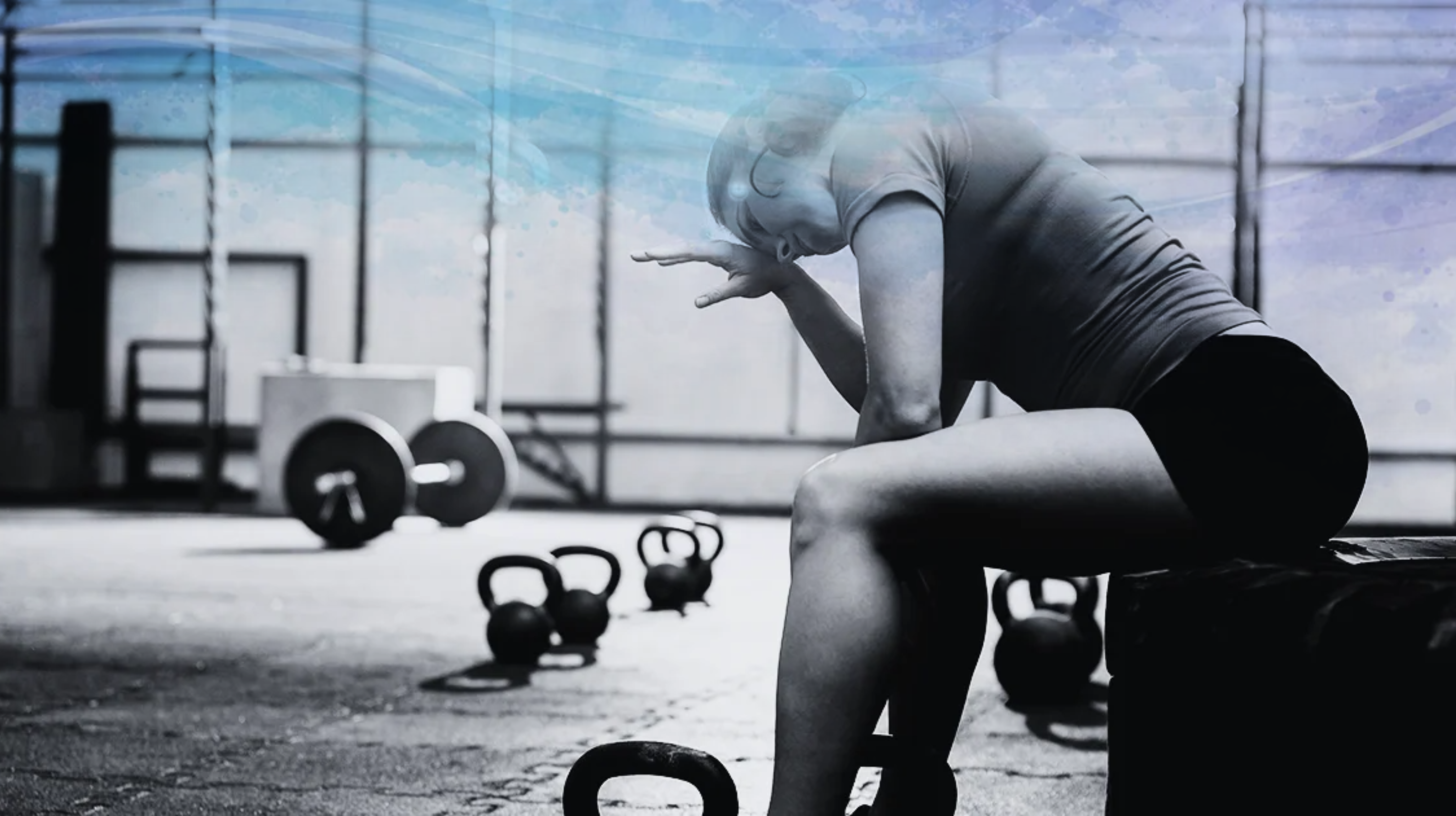
You’re working out.
Maybe three, four, even five days a week.
You know your way around the gym and not afraid of weights. You try to eat well, get your protein in, stay active and make decent choices most of the time.
So why on earth aren’t you seeing results?
This is one of the most frustrating places to be because you’re not doing nothing. You’re putting in the work.
But your strength isn’t changing. Your body composition feels stuck. You’re tired. You’re second guessing your nutrition. Maybe you’ve even started believing this is simply what happens after 40.
It isn’t.
And before you decide you need to work out more, eat less, add another cardio session or blow up everything you’re currently doing, let’s look at what might actually be going on.
Because effort and effective effort are not always the same thing.
The No B.S. Answer
If you’re working out consistently after 40 and not seeing results, doing more isn’t automatically the solution.
Look first at progression, training quality, nutrition, protein, recovery and whether your plan is actually changing as your body changes.
Your body may not need more punishment.
It may need a better strategy.
1. You’re Exercising, But You’re Not Progressing
Showing up matters.
But showing up and repeating the exact same workouts with the exact same weights, reps and intensity for months isn’t a progression strategy.
Your body adapts.
That’s actually one of the cool things about it.
But if you want it to continue getting stronger, it needs a reason to.
That might mean gradually increasing weight. Adding reps. Improving your range of motion. Controlling the movement better. Changing an exercise when appropriate. Improving your technique so the muscle you’re trying to train is actually doing the work.
This is progressive overload, and it doesn’t mean adding ten pounds to the bar every week.
It means your training needs to progress in some measurable way over time.
If you’ve been doing the same three sets of ten with the same dumbbells since 2024, we’ve found a problem.
Your body isn’t being stubborn… you stopped giving it a reason to change.
2. You’re Doing More Instead of Doing Better
This is a big one.
When women stop seeing results, the first instinct is often to add.
Another workout. More cardio. More steps. Another class.
No.
More is not automatically better.
You can absolutely exercise a lot and still have a poorly designed training program.
What are you trying to accomplish with each workout? Are you tracking your lifts? Are you recovering? Is there a progression plan? Are you training hard enough to create adaptation? Or are you doing so much that you never properly recover?
Those questions matter more than how many sweaty hours you logged this week.
Sore is not a result.
Sweaty is not a result.
Tired is not a result.
Stronger is a result.
3. You’re Under-Fuelling the Work You’re Asking Your Body to Do
I spent years believing being lean meant eating less and doing more.
At one point, I was eating around 1,200 calories a day and doing seven-plus hours of cardio a week.
Was I lean? Yep.
Was that an approach I would recommend to the women I coach today?
Absolutely not.
You cannot keep asking your body to train, recover, build muscle, manage stress and perform well while continually giving it less and less fuel.
This is especially important for active women over 40.
Protein matters. Carbohydrates matter. Dietary fat matters. Total energy intake matters.
If every plateau sends you straight to “eat less and move more,” stop.
That advice has already taken enough from women.
Eating less isn’t automatically more disciplined. Training more isn’t automatically more effective. And exhausted certainly isn’t the goal.
You’re trying to build a stronger body.
You need to fuel one.
4. Your Protein Intake Is Still an Afterthought
Yes, I talk about protein a lot.
No, I’m not going to stop.
If building or maintaining muscle is part of your goal, protein cannot be the thing you remember at 8 p.m. when you realize you’ve eaten approximately 47 grams all day.
Rather than trying to cram it all into dinner, spread protein throughout your day.
Look at breakfast, lunch, your snacks.
And before you decide you need some elaborate new meal plan, start with the foods you already eat.
Have a bigger portion of chicken at lunch. Add Greek yogurt to breakfast. Eat the whole chicken breast instead of half. Put more lean ground beef in the bowl. Add eggs or egg whites.
This doesn’t need to become another full-time job.
It needs to become intentional.
5. You’re Ignoring Recovery
I know.
Recovery isn’t sexy.
Nobody posts a dramatic Instagram reel about going to bed on time.
But your body doesn’t build strength while you’re lifting.
Training creates the stimulus.
Recovery is where your body responds to it.
Sleep, rest, nutrition and stress all matter.
That doesn’t mean you need to live a stress-free life. Good luck with that.
It means your training program needs to account for the life you actually have.
If work is insane, you’re sleeping five hours a night, the kids need you, your stress is through the roof and you’re trying to compensate by training harder every day, your body may not need another workout.
It may need a chance to recover from the ones you’re already doing.
6. Your Form May Not Be as Good as You Think It Is
This one can sting a little.
You can know what a squat is and still need help with your squat.
You may have trained for years and still have technique issues.
I coach experienced women who send me videos of their lifts because sometimes a tiny adjustment changes everything.
Foot position. Depth. Tempo. Bracing. Range of motion. Where the load is sitting.
What looks like a small change can completely change what an exercise is doing.
This is one of the limitations of following workouts from an app, Instagram or AI.
It can tell you what exercise to do… it can’t see what you’re actually doing.
And sometimes that’s exactly where the problem is.
7. You Have a Workout Plan, But Nobody Is Coaching You
This might be the biggest one.
There is no shortage of information.
AI can write you a workout. So can Google. So can an app.
But none of those things automatically know whether you’re executing it well, recovering from it, progressing appropriately or spinning your wheels.
That’s the difference between having a workout and being coached.
Sometimes you need someone to look at what you’re actually doing and say:
This is working. Keep going.
This needs to change.
Eat more here.
Pull back there.
Your form needs adjusting.
We need to increase this.
Stop doing that.
That feedback loop matters.
Because if you’re already putting in the effort, the answer may not be to try harder.
It may be to get more strategic about where that effort is going.
Working Harder Is Not Always the Answer
There’s a point where constantly adding more stops being discipline and starts becoming noise.
More workouts. More cardio. More rules. More restriction. More random advice.
You don’t need to keep throwing crap at the wall and hoping something finally works.
You need to understand what your body is doing, what your training is doing and where the disconnect is.
That’s a big part of what being Built Confident means to me.
It’s not blindly following another plan and hoping for the best.
It’s understanding why you’re doing what you’re doing, learning what works for your body and building enough knowledge and confidence that you stop second guessing every decision.
If you’re working hard and not seeing results, don’t automatically assume you’re the problem.
Look at the system.
Then change what actually needs changing.
Small Shifts = BIG Wins.
Common Questions About Workout Results After 40
Why am I working out but not seeing results after 40?
If you’re exercising consistently without seeing progress, look beyond how often you work out. Training progression, exercise quality, nutrition, protein intake, recovery, sleep and stress can all affect your results. More exercise is not automatically the answer.
Do women over 40 need to work out more to lose weight?
Not necessarily. Adding more exercise can sometimes create more fatigue without addressing the reason progress has stalled. Your overall training, daily activity, nutrition, recovery and individual goals all need to be considered.
How long should I follow a workout program before changing it?
Don’t change a program simply because you’re bored or because you saw something new online. A good program should give you enough consistency to track progress while allowing adjustments based on your performance, recovery and goals.
Can women still build muscle after 40?
Absolutely. Women can build muscle and strength after 40 with appropriately challenging resistance training, enough protein and nutrition, progressive training and adequate recovery.
Ready for someone to actually look at what you’re doing instead of handing you another generic plan?
Built Confident Academy is personalized six-month coaching for women who are ready for more strategy, feedback and support.